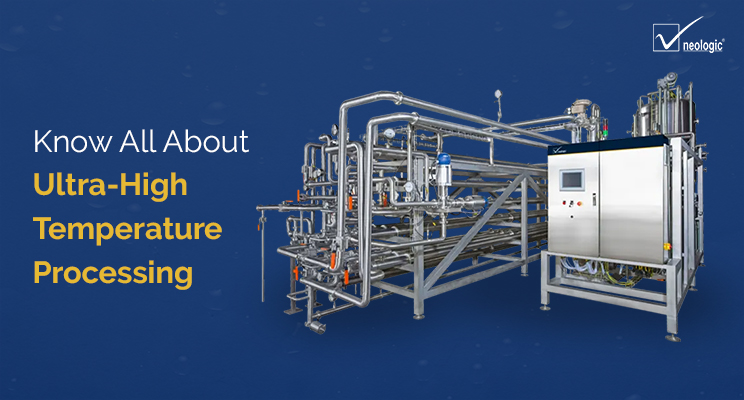
Know All About Ultra-High Temperature Processing
UHT (Ultra-High Temperature) processing is a method used to make milk safe to drink and last longer without refrigeration. In this process, milk is quickly heated to a very high temperature in between 135°C to 154°C for just 2 to 4 seconds. This fast heating kills all harmful germs. Unlike regular pasteurization, UHT does not just makes milk safe, it helps retain most of the taste, color, and nutrients in milk. After heating, the milk is packed in clean, germ-free containers so it can be stored for months without spoiling, even at room temperature.
How UHT Processing Works
UHT processing is a thermal preservation method where liquid food products are rapidly heated to ultra-high temperatures—typically between 135°C and 150°C—for a very short time, usually 2 to 4 seconds. This brief but intense heat treatment is highly effective in destroying bacteria, spores, yeasts, and other microorganisms that could lead to spoilage or foodborne illness.
Immediately after heating, the product is rapidly cooled to ambient or refrigeration temperature to preserve quality attributes such as flavor, color, and nutritional value.
This process is widely used for liquid foods such as:
- Milk and dairy-based drinks
- Fruit juices
- Creamy sauces and desserts
Following UHT treatment, the product is transferred into pre-sterilized containers under aseptic conditions—a practice known as aseptic packaging. This ensures that no microorganisms re-enter the product, maintaining its sterility.
Applications of UHT Processing
UHT processing is extensively utilized in the dairy industry, especially for products like milk and cream. UHT-treated milk—commonly known as long-life milk—can be safely stored at room temperature for several months without refrigeration. This makes it particularly advantageous in regions where cold chain infrastructure is limited or inconsistent.
Beyond dairy, UHT technology is applied to a broad range of liquid food products, including:
- Fruit juices
- Soups and broths
- Sauces and gravies
By eliminating the need for preservatives, UHT processing helps extend shelf life while maintaining product safety and quality.
Importantly, UHT is not limited to food applications. In the pharmaceutical industry, certain liquid medications and nutrient solutions are also processed using UHT to ensure microbial sterility and extended storage stability, especially in sensitive formulations.
The adaptability of UHT processing across multiple sectors highlights its role as a critical technology for ensuring product safety, shelf stability, and global distribution efficiency.
Advantages of UHT Processing
- Long Shelf Life: Products can be stored for 6 to 12 months without refrigeration.
- Kills Harmful Germs: Destroys bacteria, spores, and other microorganisms that can spoil food or cause illness.
- No Need for Preservatives: Keeps food safe.
- Saves Energy: in Storage Since no refrigeration is needed, it reduces electricity use during transport and storage.
- Keeps Taste and Nutrition: Short and gentle heating time helps keep the flavor, color, and nutrients of the product.
- Useful in Many Places: Very helpful in areas without stable electricity or where cold storage is hard to find.
- Good for Global Shipping: Products can travel long distances without spillage or contamination.
Future Trends in UHT Processing
As consumer demands and regulatory requirements evolve, UHT processing is advancing with innovations aimed at improving product quality, sustainability, and operational efficiency. Key trends include:
1. Enhanced Product Quality through Improved Heat Exchange Technologies
Future UHT systems are focusing on reducing thermal impact to preserve taste, color, and nutritional value. Technologies such as hybrid direct-indirect systems and advanced tubular heat exchangers are being optimized to minimize holding times and heat load.
2. Energy Efficiency and Sustainability
Emphasis is growing on reducing energy and water consumption using regenerative heat exchangers, optimized CIP cycles, and low-emission boiler systems. These measures help reduce the environmental footprint of UHT facilities.
3. Improved Aseptic Packaging Solutions
Innovations in sustainable packaging materials, such as biodegradable or recyclable multilayer cartons, are gaining momentum. At the same time, modular and compact aseptic filling lines are making UHT technology more accessible to smaller producers and niche brands.
In Conclusion, Ultra-High Temperature (UHT) processing is a method used to heat food and drinks to a very high temperature for a short time. This kills germs and makes the product safe to store for a long time without refrigeration.
When UHT is used together with special clean packaging (called aseptic packaging), the food or drink stays fresh for months. This is helpful in places where refrigerators are not always available.
UHT processing is very important in making long-life products like milk, juice, soups, and sauces. It helps keep the food safe, good-tasting, and easy to store and transport. That is why UHT is a big part of the modern food and drink industry.
Webinar: Current
trends in Aseptic Processing for Food & Beverages
Get insights about the evolving market trends and technological advancements in Aseptic
processing through our Emerging Food Tech Webinar series.